


The endless benefits of staying hydrated
The endless benefits of staying hydrated
Our bodies crave constant hydration. The reasons for this are plentiful, and a failure to drink enough fluids can very quickly lead to the onset of health problems.
The Real Benefits of Staying Hydrated (and How to Do It Properly)
Hydration is one of the most over-talked-about and under-thought-about topics in wellness. We're told to drink eight glasses a day, three litres a day, water-with-lemon-first-thing, water-before-coffee — and somewhere in all that noise, the actually useful advice gets lost.
Here's a straightforward look at what staying hydrated actually does for your body, how much you really need, and where electrolytes fit in.
Why hydration matters
Water is involved in almost every process your body runs. It transports nutrients to your cells, helps regulate body temperature, supports digestion and bowel function, cushions joints, and helps the kidneys filter waste. When you're noticeably dehydrated — even mildly — most of those processes work less efficiently.
The most commonly reported effects of mild dehydration include:
- Tiredness and reduced concentration
- Headaches
- Dry mouth, lips and skin
- Constipation
- Darker, stronger-smelling urine
- Feeling hungry when you're actually thirsty
None of this is dramatic in isolation, but it adds up over a day — and over a week of poor hydration, most people genuinely feel worse without quite knowing why.
How much fluid do you actually need?
The "two litres of water a day" rule that gets repeated everywhere is more of a rough guideline than a hard requirement, and it's worth being honest about.
NHS guidance for adults in the UK is roughly six to eight cups or glasses of fluid a day — and crucially, that doesn't have to be plain water. Tea, coffee, milk, soft drinks, and the water content of fruits and vegetables all count towards your overall fluid intake. Individual needs vary based on body size, activity level, climate, pregnancy, and certain health conditions.
A more useful guide than chasing a litre count:
- Drink when you're thirsty.
- Check the colour of your urine — pale straw is a good sign; consistently dark yellow suggests you need more fluid.
- Drink more in hot weather, during exercise, when you're unwell (especially with fever, vomiting or diarrhoea), and when you've been drinking alcohol.
- If you sweat a lot or exercise hard, plain water alone may not be enough — and this is where electrolytes come in.
Water alone isn't always the whole story
When you sweat, you don't just lose water — you lose minerals called electrolytes. The six essential ones are sodium, potassium, magnesium, calcium, chloride and phosphate. They're involved in fluid balance, muscle function, nerve signalling and energy metabolism.
For most everyday situations, a normal diet and ordinary drinking water replaces what you lose. But there are times when topping up electrolytes can make a real difference:
- During and after sustained exercise (especially anything over about an hour, or shorter sessions in hot conditions)
- When you've been sweating heavily — hot weather, manual work, a hot environment
- When you're recovering from illness involving fluid loss
- On travel days, particularly long flights
- After a heavy night, when both fluids and minerals are depleted
- First thing in the morning, if you regularly wake up feeling sluggish or foggy
You don't need an electrolyte drink every day to be well-hydrated. But on the days you do need one, the difference between a properly dosed product and a sugary "sports drink" is significant.
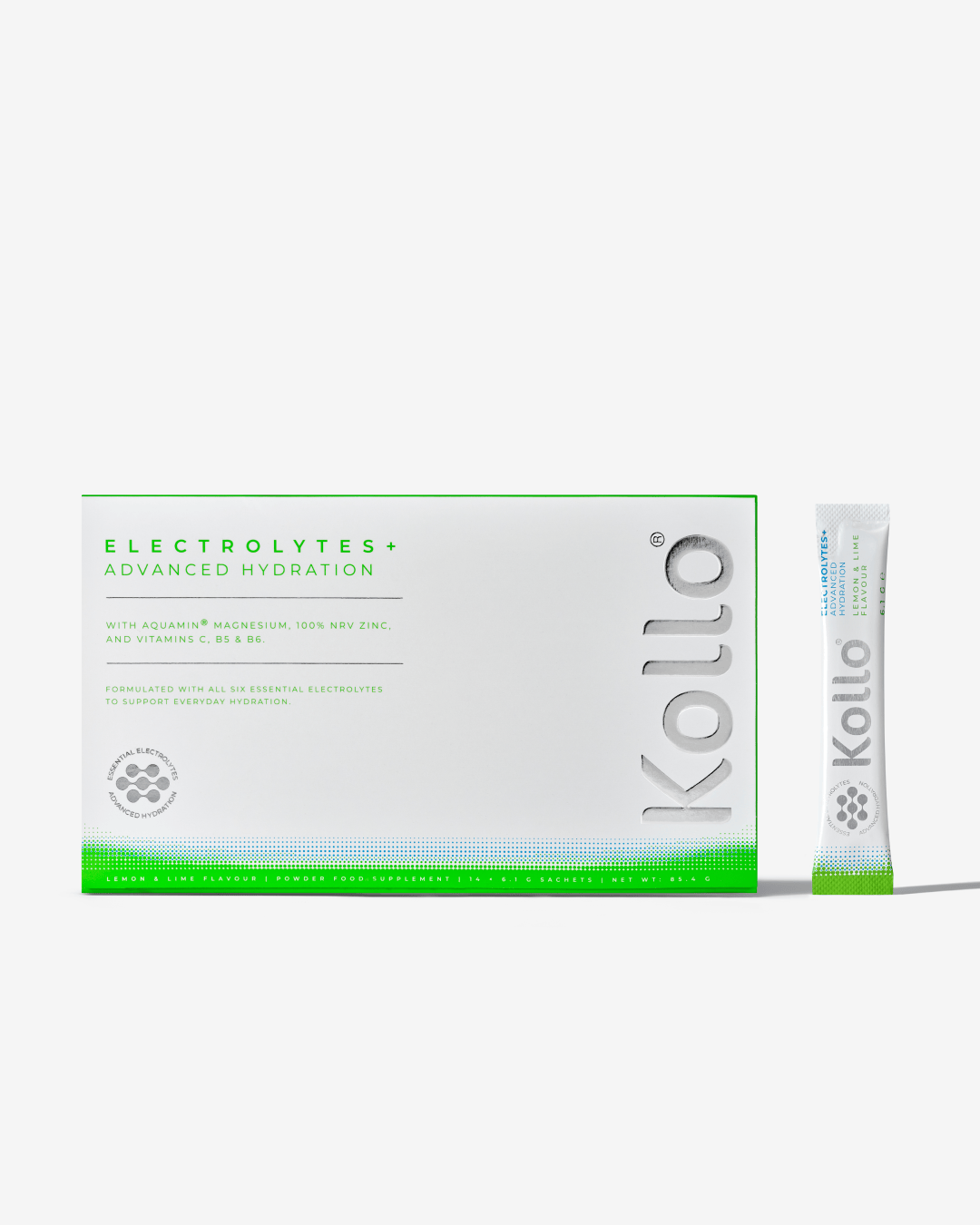
A properly dosed electrolyte sachet — all six essential electrolytes, no sugar, no artificial fillers. Mix one sachet into 500ml of water before, during or after exercise, in hot weather, or any time you need to top up.
- All six essential electrolytes (sodium, potassium, magnesium, calcium, chloride, phosphate)
- 800mg Himalayan pink salt for proper sodium dosing
- Marine-derived Aquamin® magnesium with trace minerals
- Sugar-free, vegan, made in the UK
- Available in Lemon & Lime, Raspberry, Orange and Tropical
What hydration won't fix
Hydration is foundational, but it's worth being realistic about the limits. Drinking more water beyond what your body actually needs doesn't keep providing returns — it just means more trips to the loo. The "drink three litres a day for glowing skin" message you'll see on social media is overstated. Once you're adequately hydrated, additional fluid doesn't visibly plump out wrinkles or transform your skin.
What it does do is keep your baseline right, so the other things you do for your health — sleep, exercise, diet, supplements, skincare — can actually work properly.
Where collagen fits in (briefly)
If you take a collagen supplement for skin, joint or general wellness reasons, hydration is the boring half of getting any benefit from it. Your body uses water in almost every metabolic process, and a well-hydrated body is better able to use what you give it. Kollo Liquid Marine Collagen pairs well with Electrolytes+ for that reason — different jobs, complementary roles.
Frequently asked questions
Do I really need to drink two litres of water a day?
Not necessarily as a fixed rule. NHS guidance for adults is roughly six to eight cups or glasses of fluid daily, and that includes tea, coffee, milk, soft drinks and the water in fruits and vegetables — not just plain water. Individual needs vary with body size, activity, climate and health. Use thirst and urine colour as practical guides rather than chasing a litre count.
When should I take an electrolyte drink instead of just water?
During or after sustained exercise (especially longer than an hour, or shorter sessions in heat), when you've been sweating heavily, when recovering from illness involving fluid loss, on travel days, or first thing in the morning if you regularly wake up feeling sluggish.
Are sports drinks the same as electrolyte drinks?
Most commercial sports drinks are built around sugar with a small amount of electrolytes added. A properly dosed electrolyte product is the other way around — meaningful mineral amounts, with sugar kept low or eliminated. They're different products for different purposes.
Can I take an electrolyte sachet every day?
Yes — Kollo Electrolytes+ is formulated for daily use. Many people take it first thing in the morning as part of their routine. If you have high blood pressure or any condition that requires you to monitor sodium intake, check with your GP first, as each sachet contains 800mg of sodium.
Does drinking more water improve my skin?
If you're genuinely dehydrated, yes — adequate hydration improves how your skin looks and feels. Beyond meeting your normal needs, drinking more doesn't keep providing visible benefits to your skin. Topical moisturisers and sunscreen do more for skin appearance than additional litres of water.


